
This is my third blog about our Beaupre ancestry. They can all be found in your blog dateline summary on the landing page.
The first blog, published October 2018, revealed that our original surname wasn’t Beaupre, it was Bonhomme! The second surprise was that the name you selected for your French class was “Louis,” which turns out to be our very FIRST descendant who used the Beaupre name – Louis-Claude Beaupre.
My second blog, posted April 4, 2019, was filled with fascinating facts including that we’re descended from Vikings in Norway.
This blog completes my trilogy.
After four days of spectacular city living in Paris, Grammy and I were looking forward to seeing Monet’s beautiful, super-famous gardens in Giverny. Talk about living up to a global reputation; we could have stayed there for days.
Afterwards, our driver brought us 125 miles Northwest to visit the Alabaster Coast which includes Fecamp and Etretat, the latter home of the famous oceanside white chalk cliffs painted by Monet (more below).
Fecamp, as you’ll recall from my April 2019 blog, was home to Nicolas Bonhomme, our descendant who started it all. He was born in 1620, the same year the Pilgrims landed in Plymouth, MA and lived in Fecamp, an important port along the English Channel, directly across from Portsmouth, England.
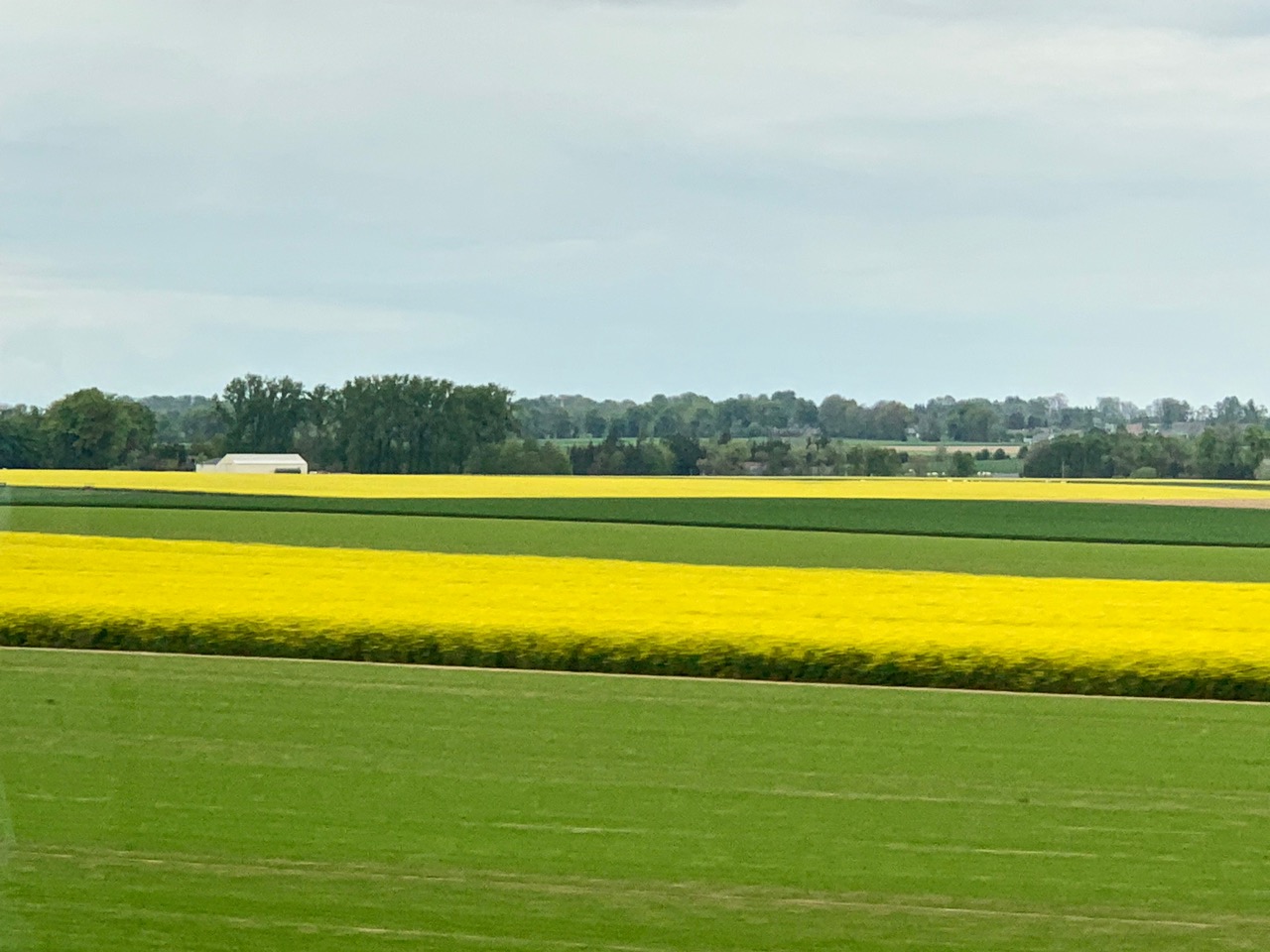
As we got closer to Fecamp, the landscape was spectacular, especially the bright yellow canola fields which extended for miles.
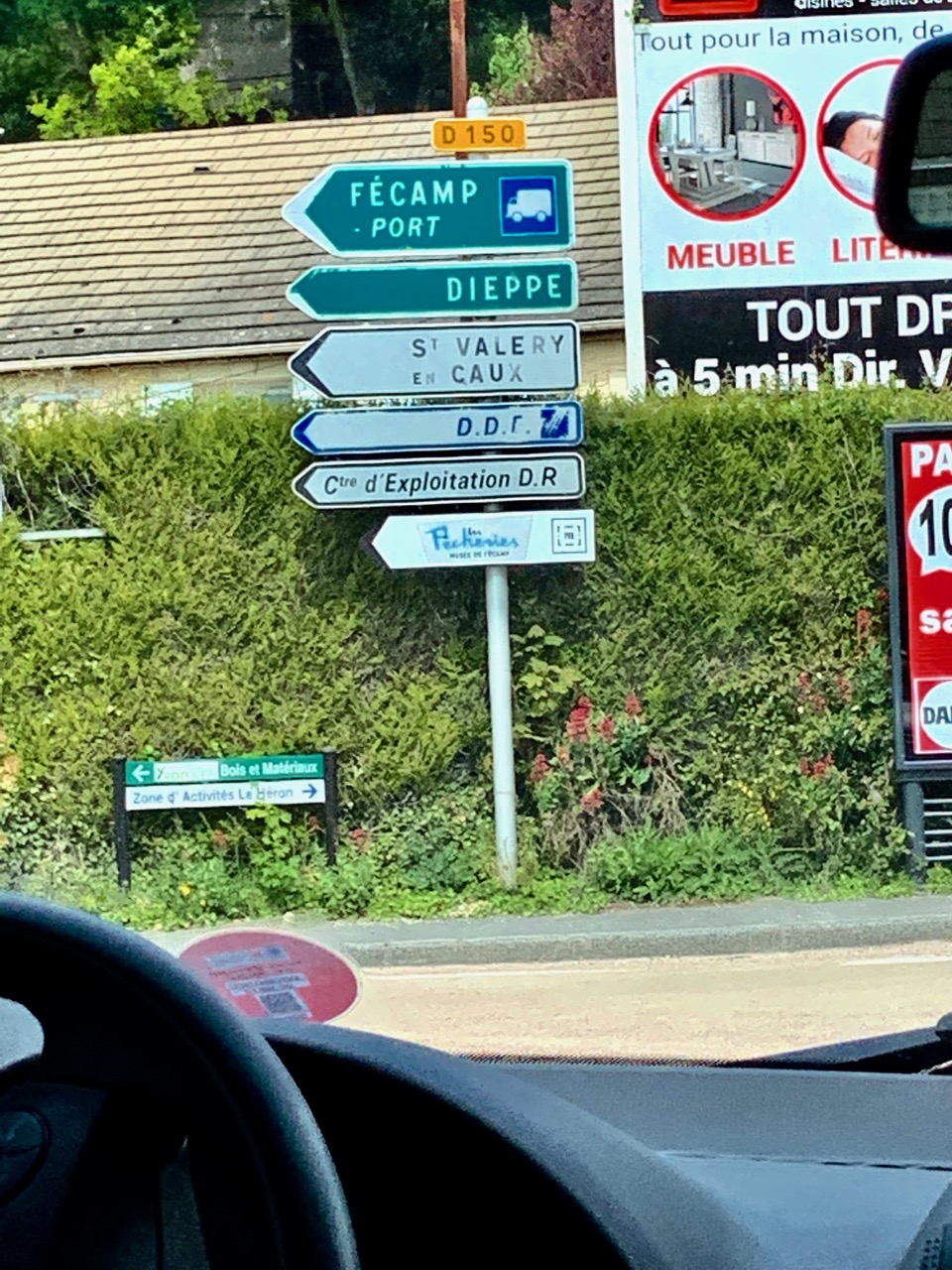
 Shortly after seeing wind turbines, signs appeared for Fecamp
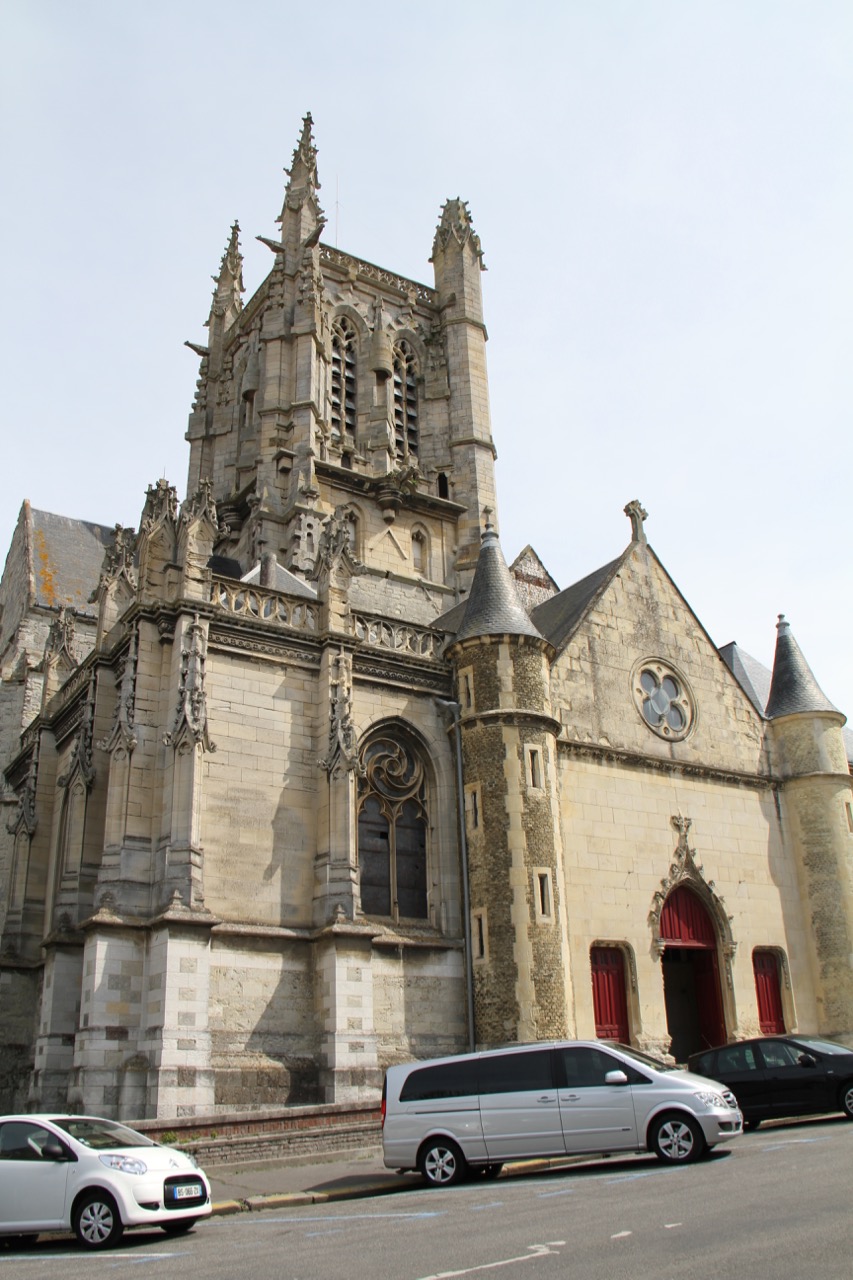
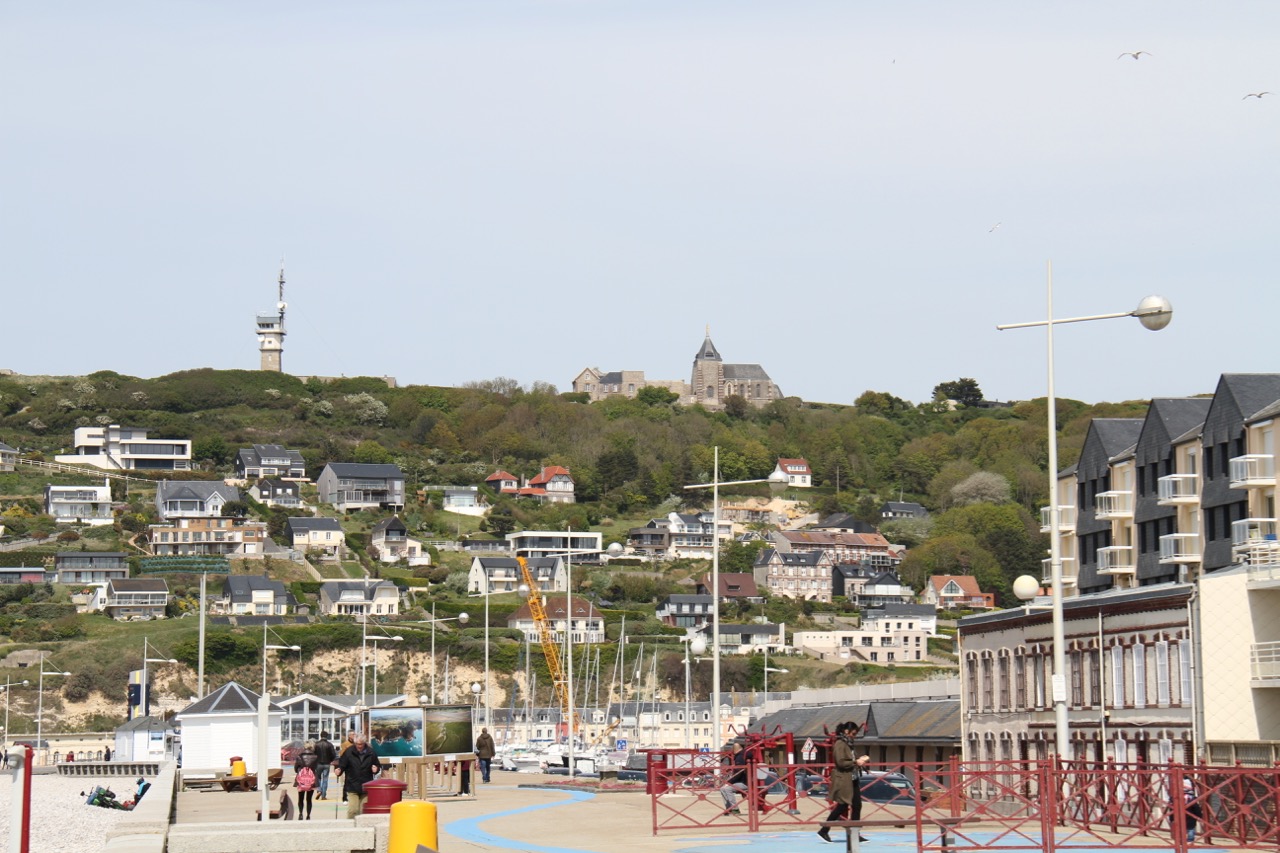
 First stop? Eglise St. Etienne, located in the center of Fecamp (population 19,000) and overlooking the harbor. This church dates back to the Renaissance period and features several pretty stainglass windows.
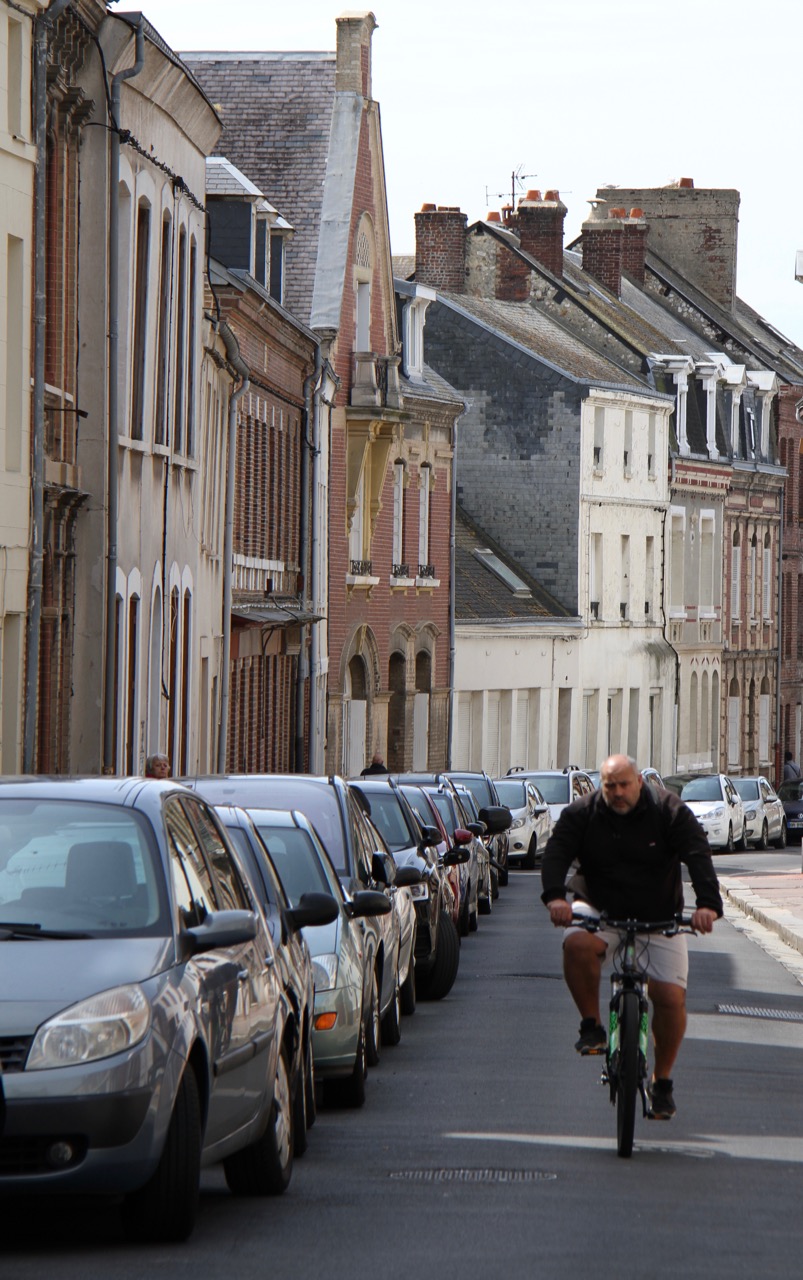 The feeling Grammy and I got about our ancestral city is that it’s very much a hard working, blue-collared kind of town, a no bullshit place where people have lived, played and died for generations.
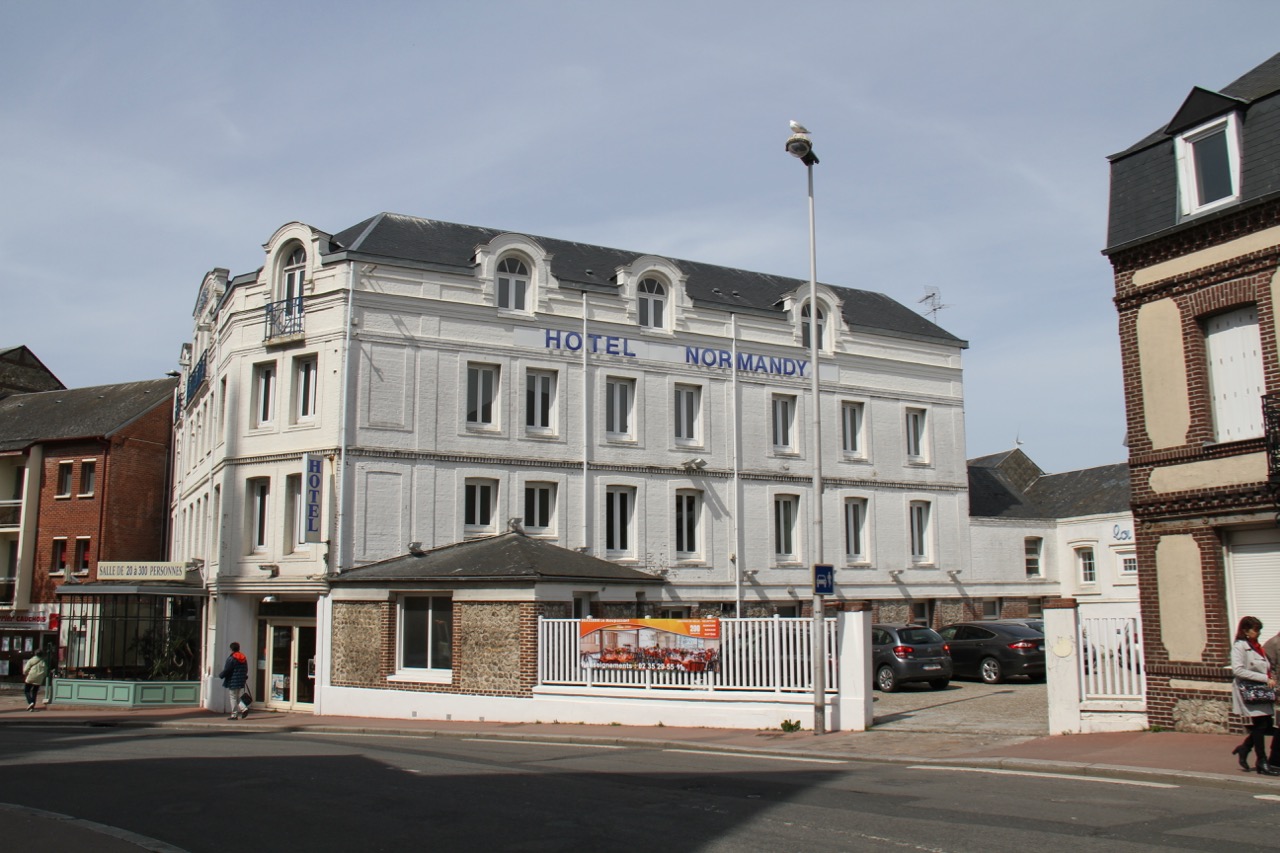
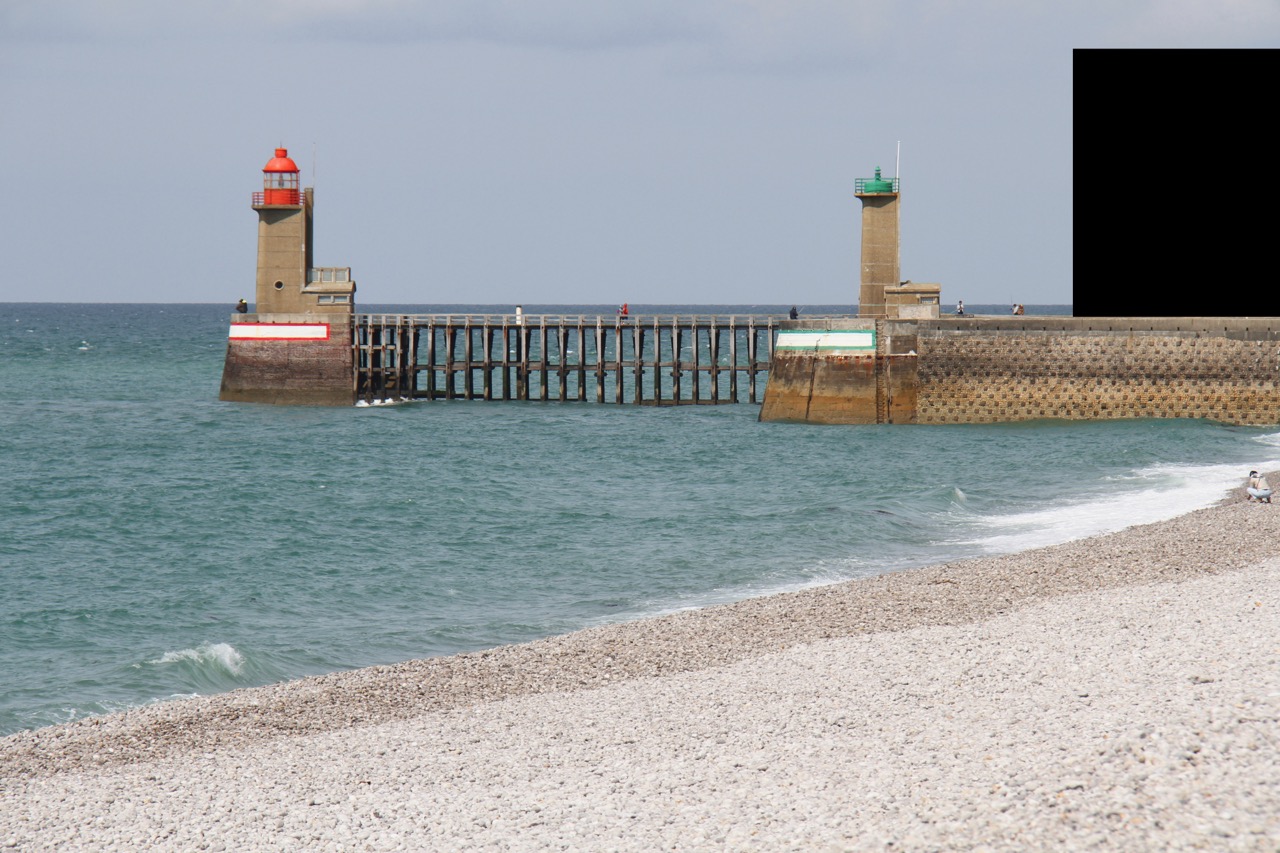
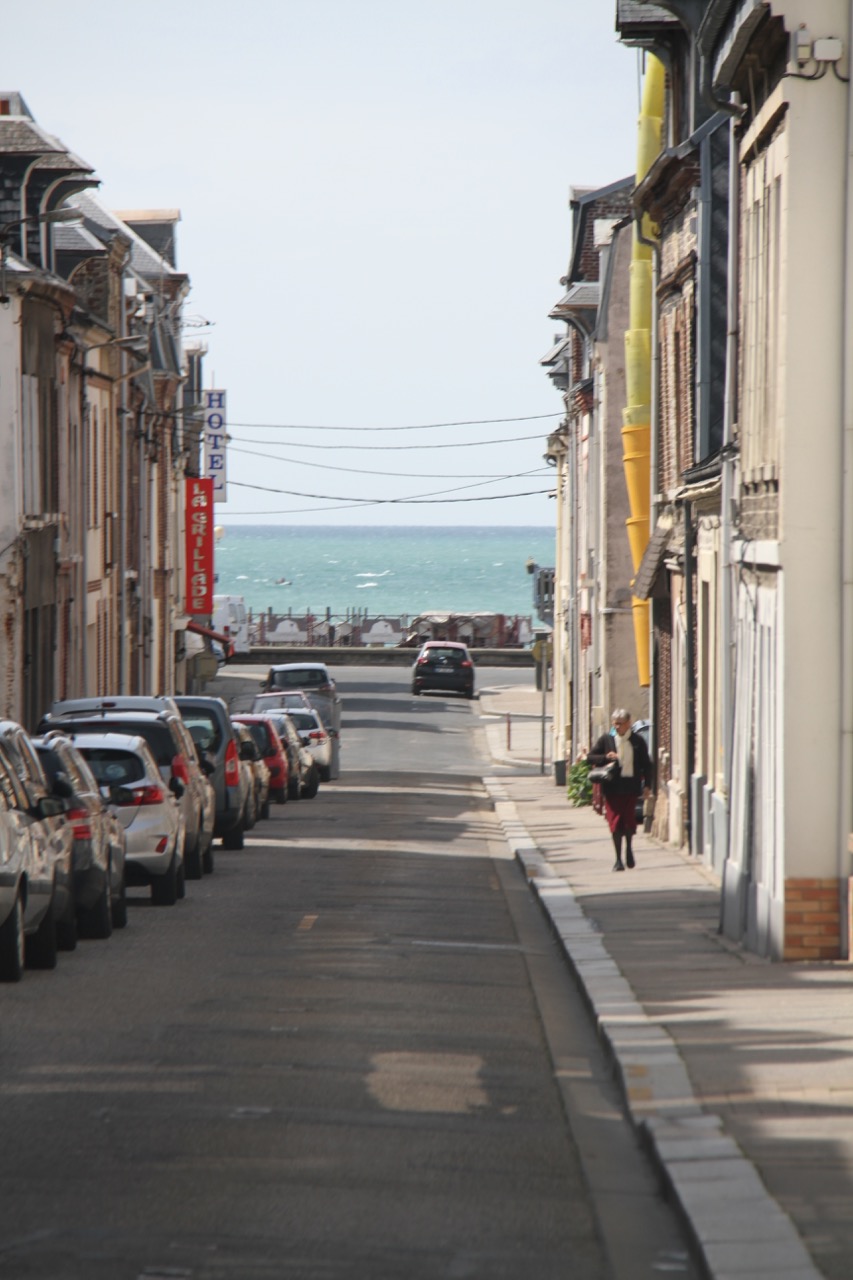 The ocean and fishing have always been the centerpiece of Fecamp’s economy and it’s still true today. There’s a little harbour and a long stretch of coastline that defines “rocky beach.” This isn’t a lie on your towel or sit on your beach chair kind of place and it’s virtually impossible to walk on (I brought several Fecamp beach stones home as ancestral keepsakes). Grammy and I walked the Promenade instead, which I’m guessing is the most frequented section of Fecamp, especially during the summer months,
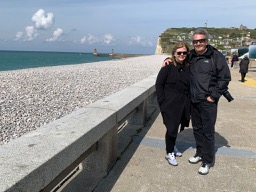 A lighthouse marks one end of the promenade. Just over it is Cap Fagnet, a cliff that offers nice views of the port, town, and English Channel (called La Manche in French). At the other end of the beach are curving cliffs.
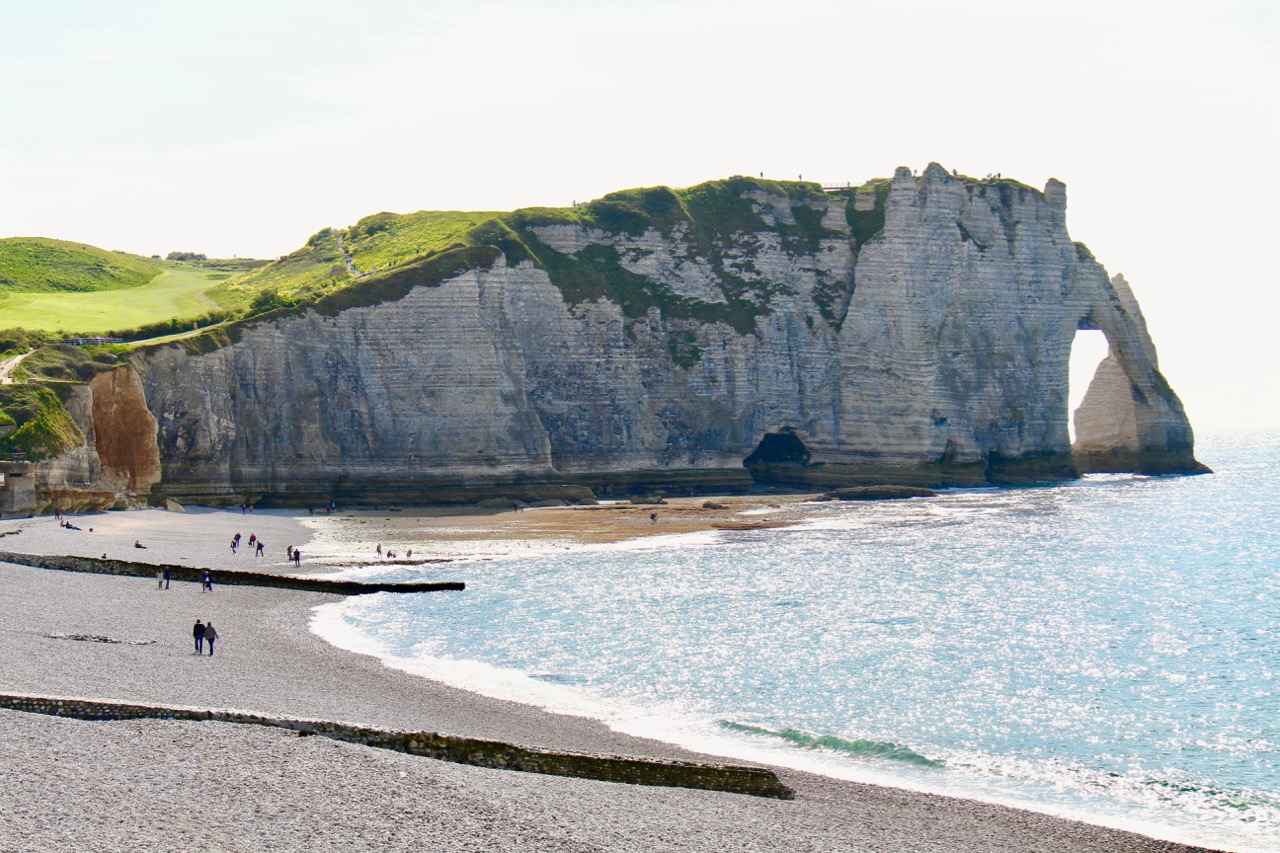
 After Fecamp, our driver brought us 10 miles south to see the beautiful white cliffs of Etretat (photo below). Etretat and Fecamp have similarities but Etretat is more spectacular. No wonder it caught Monet’s eye so many times (see next paragraph).
 Following text from The Metropolitan Museum:
Monet spent most of February 1883 at Étretat, a fishing village and resort on the Normandy coast. He painted twenty views of the beach and the three extraordinary rock formations in the area: the Porte d’Aval, the Porte d’Amont, and the Manneporte. The sunlight that strikes the Manneporte has a dematerializing effect that permitted the artist to interpret the cliff almost exclusively in terms of color and luminosity. Most nineteenth century visitors were attracted to the rock as a natural wonder. Monet instead concentrated on his own changing perception of it at different times of day.
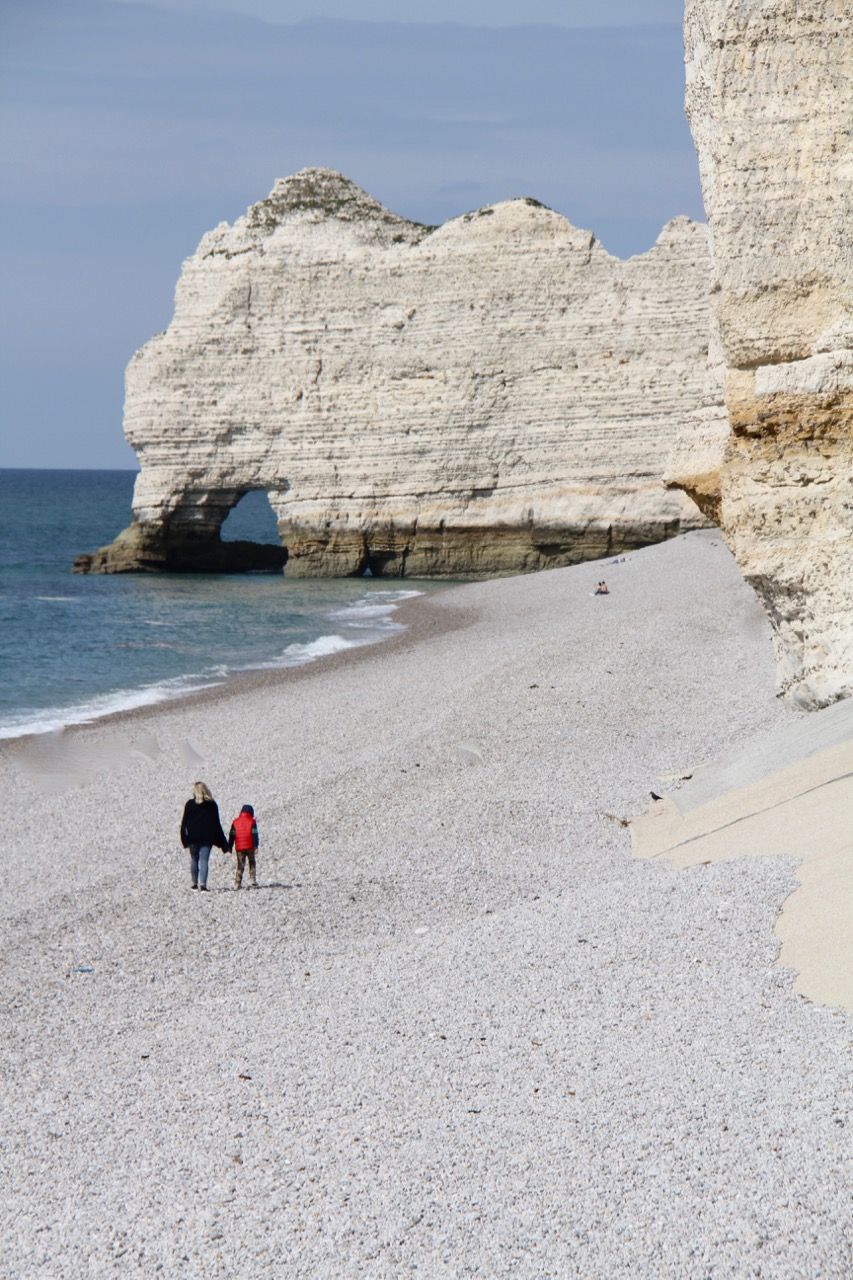
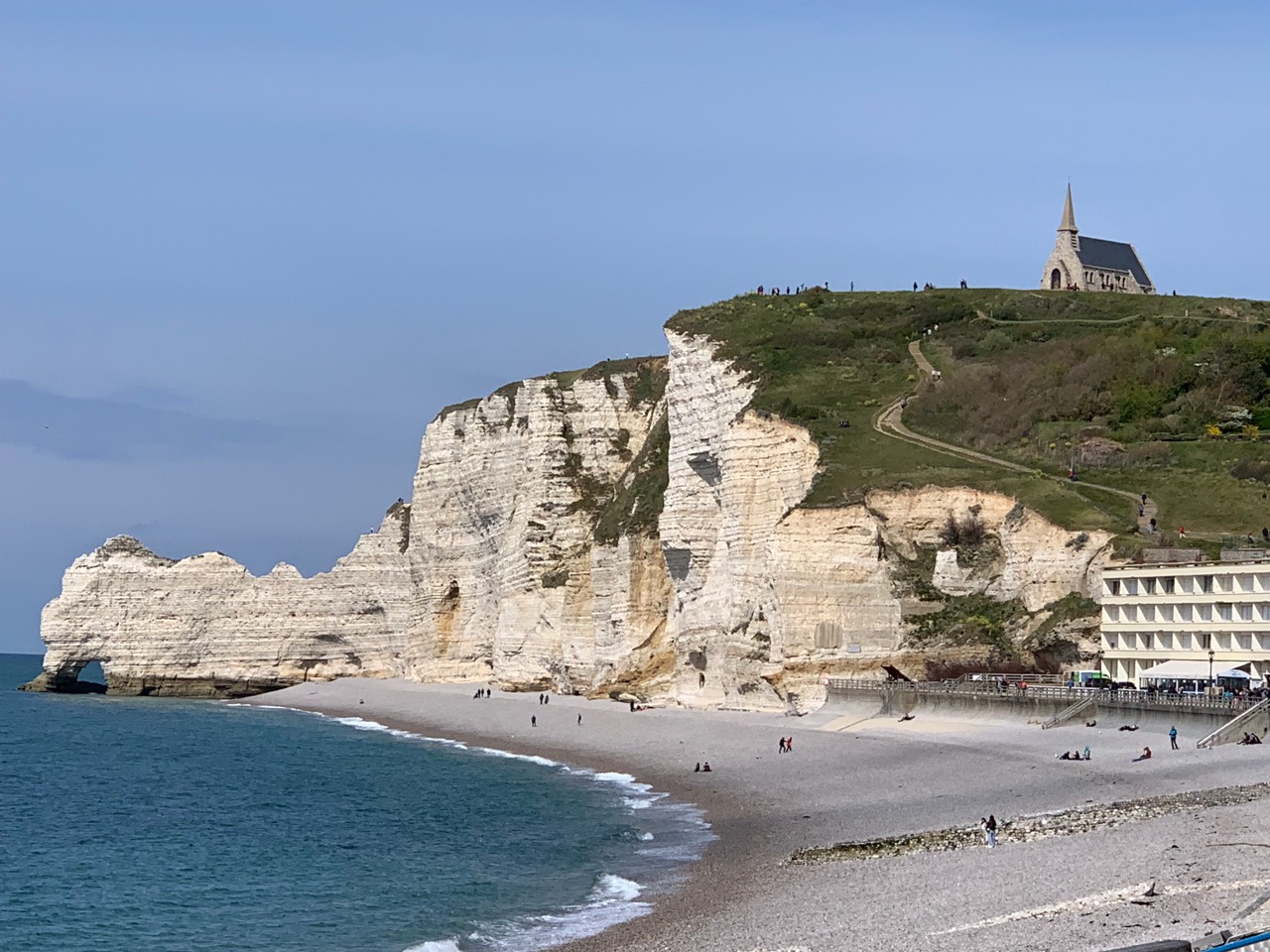
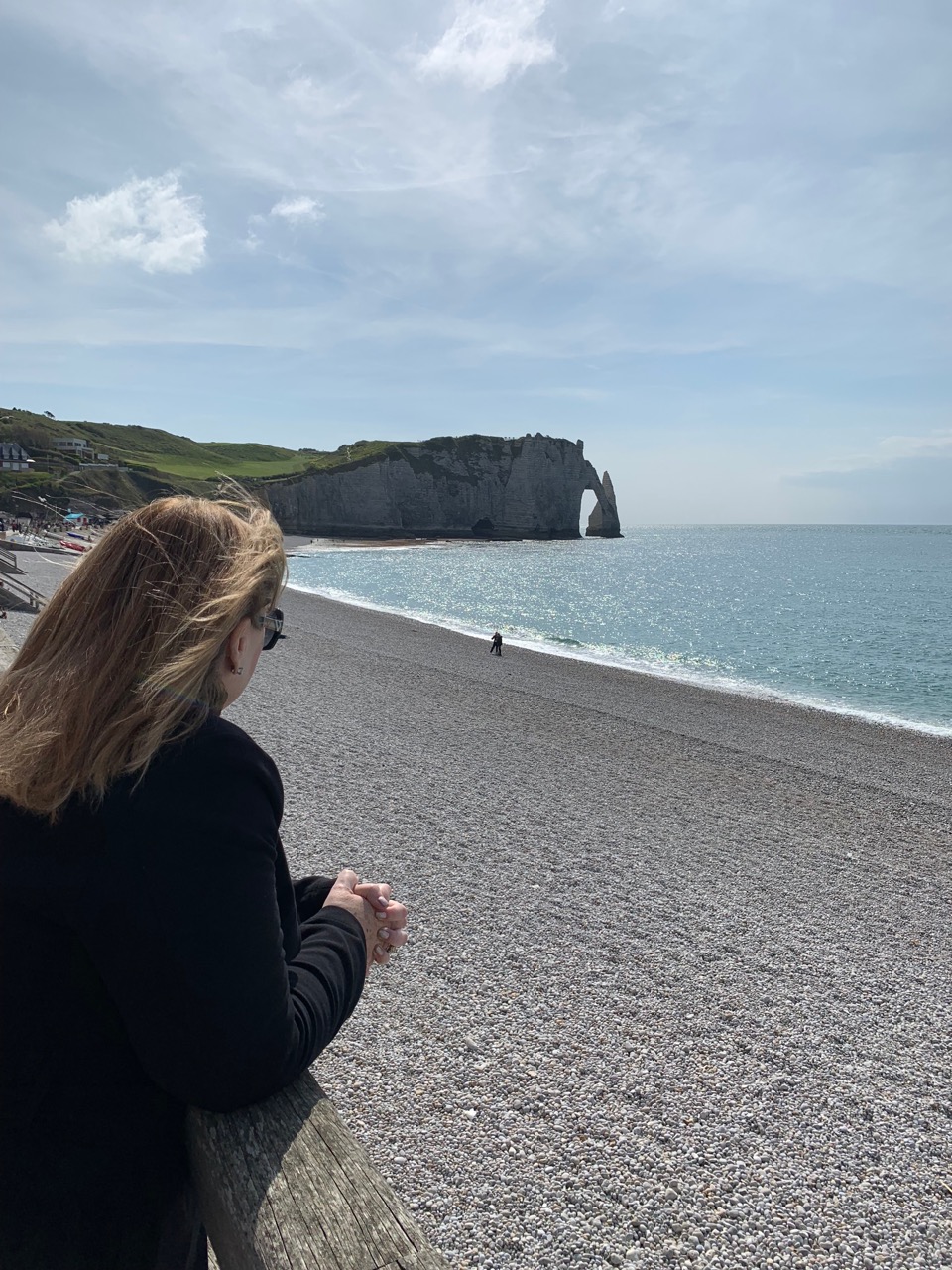 Our Etretat highlight? The amazing white cliffs and picturesque rock arches on both sides of the long beach.
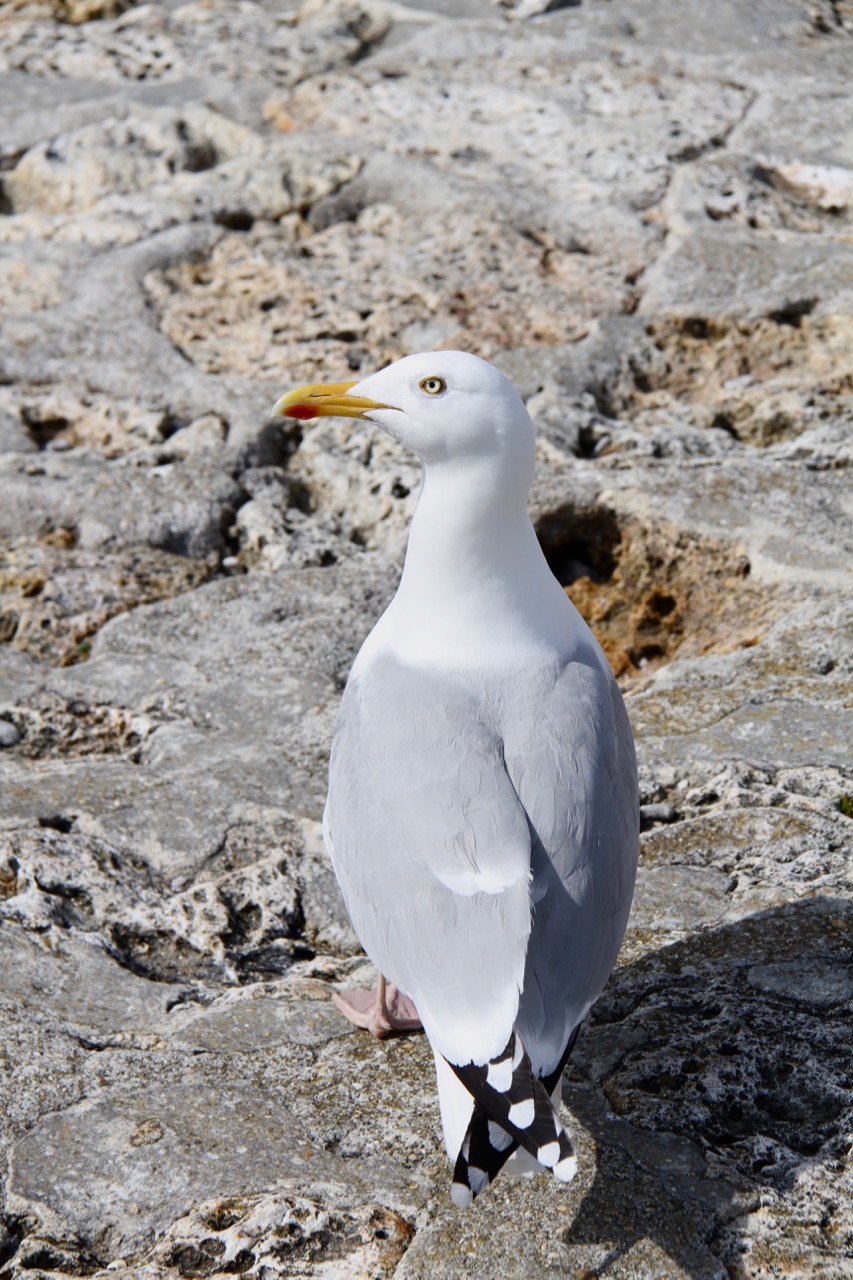
The lowlight? The aggressive seagulls who attack people for food – one of them fly down fast, hit my head and stole my ice cream cone! Damn you Etretat bird, that was tasting good!
 After Etretat, we made our way to beautiful Honfleur (what a gorgeous harbour) where we stayed overnight in Claude Monet’s bedroom at the lovely Saint Simeon Farmhouse Inn. In the morning, we traveled to Bayeux, our destination while touring the famous WW2 D-Day beaches and 1,000 year old Mont St. Michel fortress in Normandy.
I hope you get to visit France one day – if you do, don’t forget to check out Fecamp and Etretat and say hello to Nicolas Bonhomme if you can find his burial place. We researched cemeteries but had no luck figuring out where he is. You’re so smart I know you’ll solve the mystery!